Yushu Zhu
PhD
Assistant Professor
Urban Studies and Public Policy
Simon Fraser University
RESEARCH PROJECTS
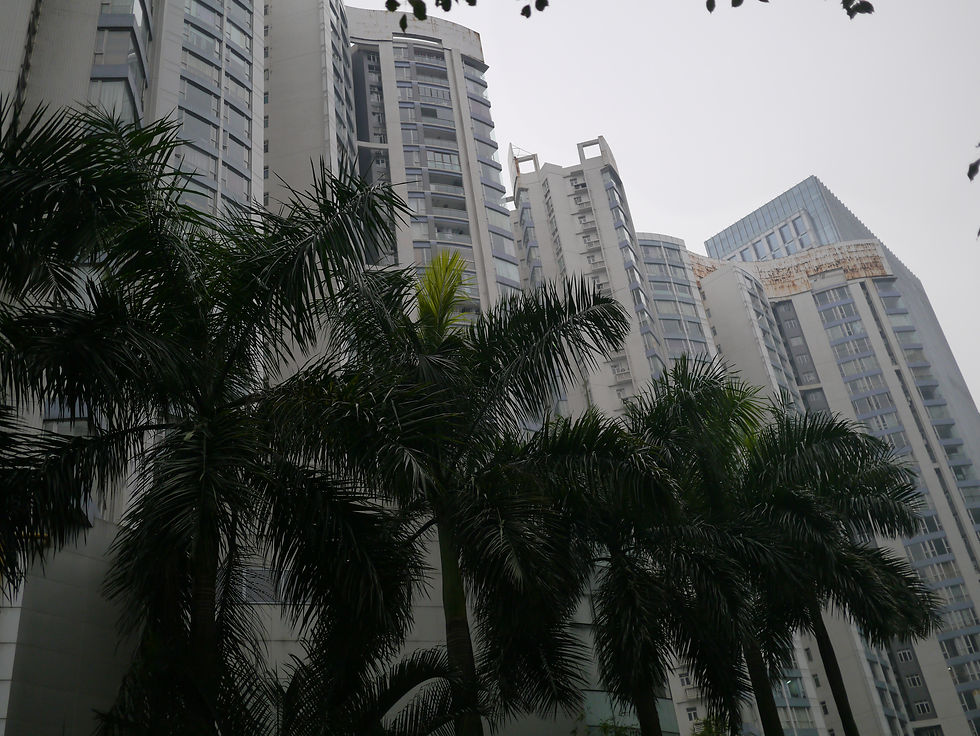


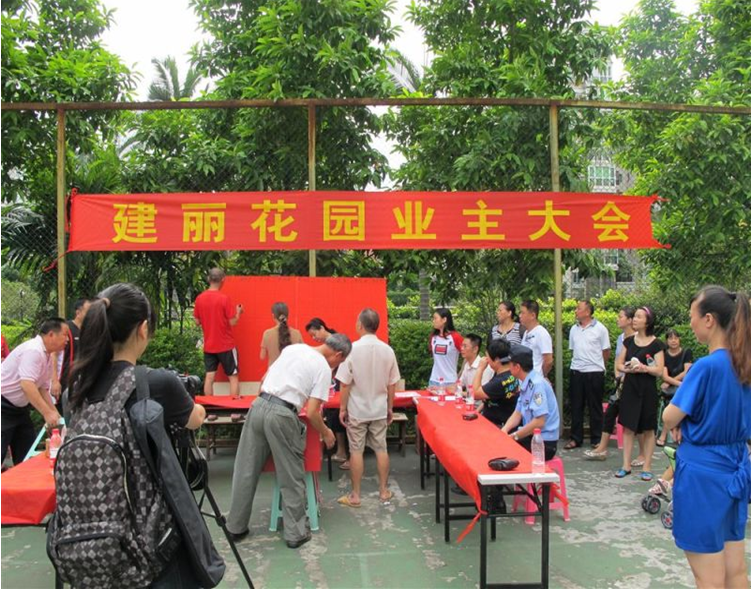
Building a Community of Our Own: How Can the Built Environment Help? A Study on Neighborhood Communal Space and Community Participation in Urban China
Dissertation Research 2012-2014
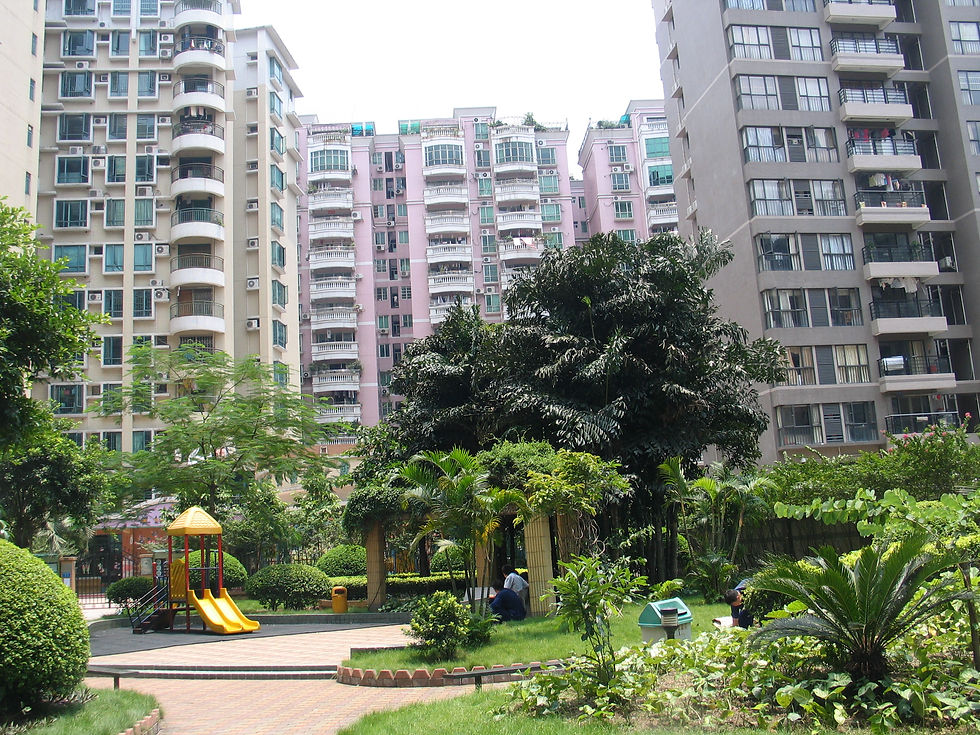
This study examines the role that neighborhood-scale design principles, particularly neighborhood communal space, play in shaping civic engagement in newly developed Chinese communities. Drawing on a city-wide neighborhood survey as well as a case study in a carefully selected neighborhood, I disentangle two competing pathways—local social capital and place attachment—by exploring people’s everyday experiences with the physical setting, neighbors, and local institutions. It is among the first attempts to systematically examine community experiences, particularly civic participation, of residents in urban China. It is situated within the metropolitan city of Guangzhou, China.
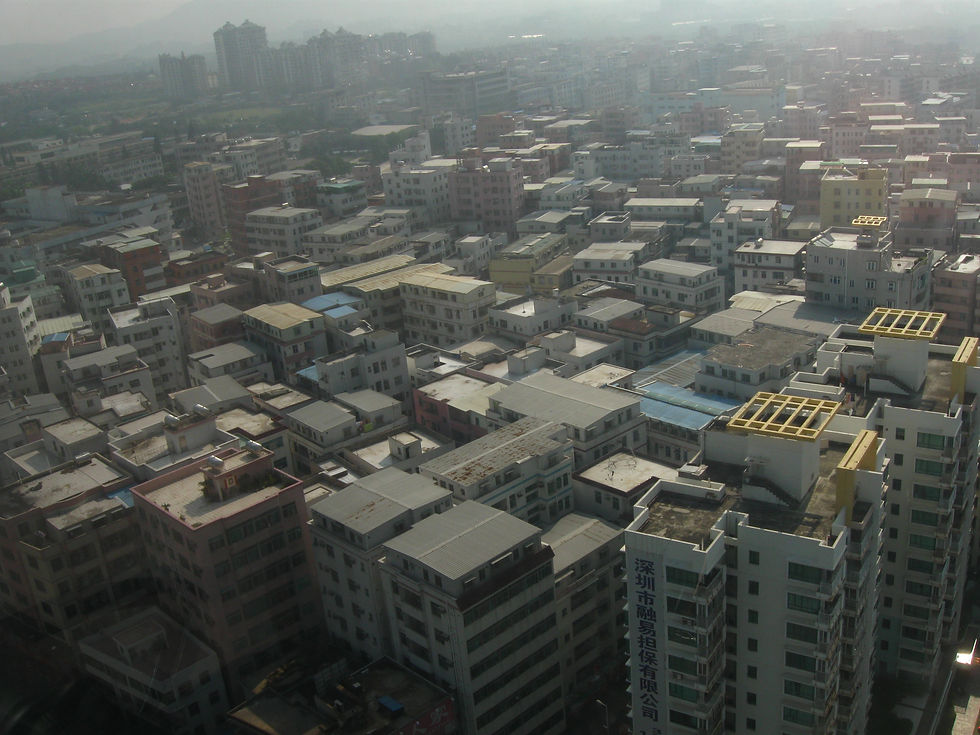

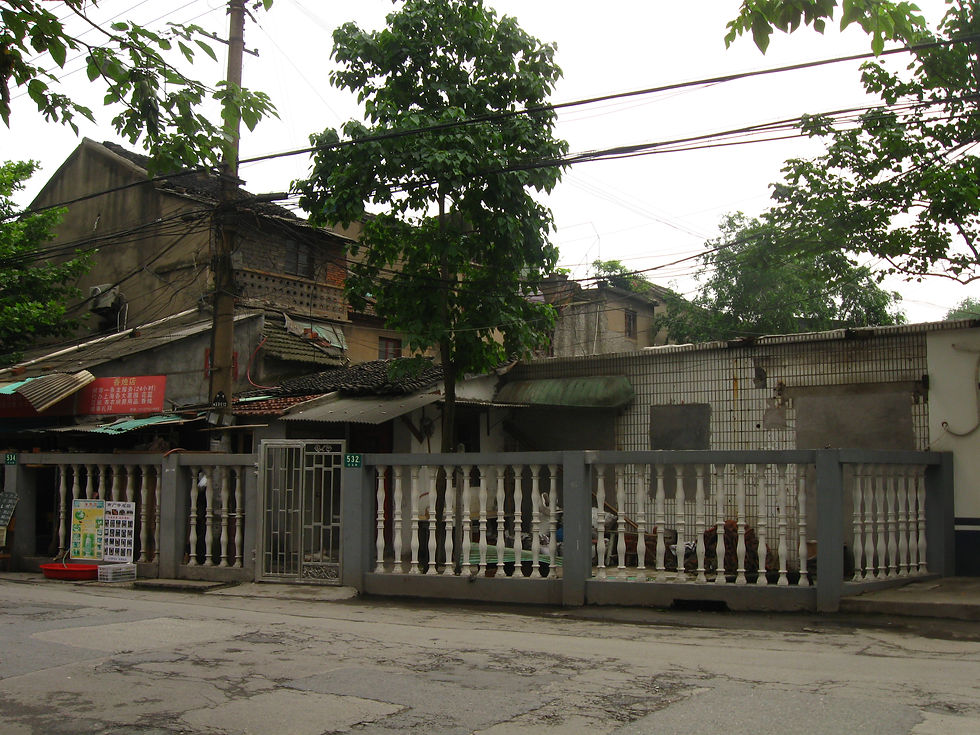


Sheltering the Floating Poor: Housing Access and Residential Mobility of Rural Migrants
Co-investigator; Visiting Scholar 05/2012-09/2012
• Developed grant proposal;
• Designed survey questionnaire;
• Conducted independent ethnographic fieldwork;
• Performed data analyses with Hierarchical Linear Modeling and Discrete-Time Logit Model
• Produced project deliverables.
PI: Prof. Si-Ming Li, D.C. Lam Institute for East-West Studies (LEWI), Hong Kong
This project is funded by the Lincoln Institute of Land Policy China Program. I investigated housing stratification in China across space and time, and found persistently strong state power and yet strengthened market forces in stratifying Chinese societies. Using a representative dataset of the 2005 mini census data in China, I unpacked the relationship between the market-oriented reform and housing access/conditions for different social groups, conditioned by city variations. Then I adopted two waves of survey data in Guangzhou, China to reveal patterns of residential moves of rural migrants vis-à-vis other urban residents since 1990.


Community Housing Needs Assessment for Metro East St. Louis
Project Coordinator and Analyst 09/2009- 05/2011
• Analyzed foreclosure and related biased lending practices using HMDA data;
• Designed and conducted surveys and analyzed data
PI: Prof. Lynne M. Dearborn, School of Architecture, University of Illinois at Urbana-Champaign
The goal of this project is to employ a service-learning model in three research-based courses in Architecture and Urban Planning to bring together various types of community and regional housing data and to create a web-based tool that will make these data easily accessible and useful for housing advocates and service providers in the Metro East St. Louis area. One important goal of this project, which responds to questions of ESLARP’s community partners as well as those being raised on the National level, is to use GIS mapping of foreclosure concentrations to better understand how many of the foreclosed upon houses are left abandoned, and to survey how many vacant foreclosed homes would be eligible for rehab dollars coming from the Federal Government’s Neighborhood Stabilization Grant Program.
See more about the project deliverable at: http://www.eslarp.uiuc.edu/view/olivetteparkneighborhood.aspx
Marketization and the Disadvantaged: Housing Stratification in Urban China
Research Assistant 05/2010-08/2010
• Assisted with proposal writing
• Performed data analysis of 2005 mini census data of China
• Implemented qualitative fieldwork
PI: Prof. Nan Lin, Professor of Sociology, Duke University
This project employs both quantitative methods and field research to examine how urban housing markets accommodate the disadvantaged (the urban poor and rural migrants) in China’s transitional economy.


Changing Housing and Community Type, Neighborly Relations and Residential Satisfaction in China
Research Associate 06/2008-08/2008
• Investigated community attachment and neighborly relations with SEM;
• Initiated a quantitative measurement of gatedness and collected fieldwork data;
• Assessed the physical environment of over 100 neighbourhoods
• Performed Structural Equation Modeling
PI: Prof. Si-Ming Li, Professor of Geography, Hong Kong Baptist University
Paper abstract: The transition from a socialist central-planned economy to a socialist market economy, together with a land tenure system reflecting institutionalized urban-rural divide, has produced neighborhood and housing types characterized by distinct socio-occupational mixes and built-environment features. Using data from a household survey conducted in Guangzhou, this paper analyzes the interrelationship between neighborly relations and community attachment, on the one hand, and neighborhood satisfaction, on the other, and examines how such relationships are conditioned by the built environment of the residence. The results show that local networks are generally weaker in commodity housing enclaves. However, commodity housing estates exhibit higher community attachment and neighborhood satisfaction, even though gating appears to have minimal effects on community attachment. (Li, Si-Ming, Yushu Zhu, and Limei Li. 2012. "Community type, gateness and neighbourhood experiences: A study of Guangzhou, China." Urban Geography 33: 237–255.)


Border-drawing and Spatial Differentiation of Urban Governance in the Pearl River Delta, China
Research Associate 06/2007-12/2008
• Data analysis
• Sampling/questionnaire design
• Recruitment and training of interviewers
• Supervision of fieldwork and data input
• Financial management
PI: Prof. Werner Breitung, Professor of Geography
Paper abstract: The housing reform in urban China since the 1990s and the ensuing spatial and social dynamics gave rise to new kinds of neighbourhoods with new logics of neighbouring and neighbourhood attachment. Meanwhile, neighbourhoods are actively
promoted as platforms for policy implementation. Both are reasons to revisit the meaning of neighbourhood attachment in the Chinese context. This article focuses on the roles of neighbourly interaction and physical environment, juxtaposing postreform commodity housing estates against traditional neighbourhoods. The analysis draws on both qualitative and quantitative datasets from three case studies in
Guangzhou and a city-wide survey. Results indicate that, compared with traditional neighbourhoods, residents of commodity housing estates have weak neighbourly interactions but strong neighbourhood attachment, which is based mainly on their satisfaction with the physical environment and less on their neighbourly contacts. Neighbourhoods in China have apparently shifted their function from social arenas to privatised living environments. (Zhu, Yushu, Werner Breitung, and Siming Li. 2012. "The changing meaning of neighbourhood attachment in Chinese commodity housing estates: Evidence from Guangzhou." Urban Studies 49:2439-2457.)